Why Does My Child's Prescription Keep Changing Every Year?
Quick answer: A child's prescription often changes each year because their eyes are still growing. When that change is driven by myopia (short-sightedness), the eye can elongate over time, which usually means stronger glasses are needed. Some change is normal, but rapid or steady yearly increases may signal faster myopia progression—something that can often be slowed with modern myopia control methods.
There's a particular sinking feeling many parents know well. You're sitting in the optometrist's chair, your child has just finished their eye exam, and you hear those familiar words: "We'll need to update the prescription again." If this is the second, third, or fourth year in a row, it's natural to start wondering whether something is wrong.
You're not overreacting, and you're not alone. A child needing stronger glasses every year is one of the most common concerns parents bring to us. The good news is that there's a clear explanation for why this happens—and in many cases, practical steps can be taken to slow it down.
When a New Prescription Every Year Starts to Feel Like a Pattern
A single prescription change rarely raises eyebrows. Children grow, and so do their eyes. But when a child's eyesight seems to get worse at every annual exam, that pattern starts to feel less like coincidence and more like a trend worth understanding.
If you've noticed your child's prescription changing every year—each time getting a little stronger—you're picking up on something real. Repeated increases usually point to myopia that is progressing rather than vision that has simply settled at a new level. Recognising the pattern early matters, because the years when children's eyes grow the fastest are also the years when intervention tends to make the biggest difference.
What Causes a Child's Prescription to Change?
A prescription is simply a measurement of how your child's eyes focus light. When the shape or length of the eye shifts, that measurement shifts too. Several factors influence why this happens during childhood.
Natural Eye Growth During Childhood
Children's bodies grow, and their eyes are no exception. From birth through the teenage years, the eye gradually lengthens and matures. A small amount of change in a prescription can reflect this normal development, particularly in younger children. This kind of change is expected and isn't usually a cause for concern on its own.
Myopia Progression and Eye Elongation
Myopia, or short-sightedness, is the most common reason a child's prescription keeps getting stronger. In a myopic eye, the eyeball grows slightly too long from front to back. Because of this extra length, light focuses just in front of the retina instead of directly on it, which makes distant objects look blurry.
The key point for parents to understand is this: the more the eye elongates, the stronger the prescription becomes. So when myopia progresses, it's because the eye is physically growing longer over time. This is why worsening eyesight in children is so closely linked to eye growth, and why slowing that growth is the focus of modern myopia management.
Genetics and Family History
Myopia tends to run in families. If one or both parents are short-sighted, their child has a higher chance of developing myopia, and sometimes of progressing more quickly. Family history doesn't guarantee anything, but it does help us understand a child's risk and plan their care accordingly.
Environmental Factors That May Contribute
Lifestyle plays a role too. Research has consistently linked extended close-up work—reading, tablets, phones, and other screens—with a higher likelihood of myopia progression. Time spent outdoors appears to have a protective effect, with natural daylight thought to support healthier eye development. None of these factors act alone, but together they help explain why myopia has become more common in children over recent decades.
Is It Normal for Myopia to Keep Increasing?
This is the question almost every parent asks, and the honest answer is: some change is normal, but the rate of change matters.
A small, gradual increase in prescription can be a routine part of growing up. What deserves closer attention is when myopia keeps increasing year after year, or when it jumps by a noticeable amount in a short period. Steady or rapid progression suggests the eye is elongating faster than we'd like, and that's the situation where monitoring and intervention become genuinely useful.
This is exactly why regular eye examinations matter. They let us track not just whether a prescription has changed, but how quickly. Two children might both need stronger glasses, but one progressing slowly and another progressing rapidly call for very different conversations. Without consistent monitoring, it's difficult to tell which path a child is on.
Signs Your Child's Myopia May Be Progressing Faster Than Expected
You don't need specialist equipment to notice some of the early signs at home. Parents are often the first to spot that something has shifted, and these everyday observations can be valuable.
Frequent Prescription Changes
The most obvious sign is the one that probably brought you here: a child who needs stronger glasses at nearly every visit. When prescriptions keep getting worse on a regular basis, it's worth discussing whether myopia control might be appropriate.
Holding Devices Closer
If your child has started holding their phone or tablet noticeably closer to their face than they used to, it can be a sign that distance vision is becoming harder for them.
Sitting Closer to Screens or the TV
Similarly, you might notice your child edging nearer to the television, or wanting to sit at the front of the classroom. These small adjustments are often unconscious attempts to see more clearly.
More Squinting or Eye Fatigue
Squinting temporarily sharpens blurry vision, so frequent squinting can hint that a current prescription is no longer doing its job. Complaints of tired eyes, headaches, or difficulty seeing the board at school can point in the same direction.
Noticing one of these signs doesn't automatically mean myopia is racing ahead—but if several appear together, or alongside repeated prescription increases, it's a good prompt to book a thorough assessment.
Why Increasing Myopia Matters Beyond Stronger Glasses
It's easy to think of myopia as a simple inconvenience solved by a new pair of glasses each year. For day-to-day vision, that's largely true. But there's a longer-term reason eye care professionals pay close attention to how far myopia progresses.
Higher levels of myopia are associated with a greater risk of certain eye conditions later in life. Because the eye becomes longer and its internal tissues are stretched, high myopia carries an increased likelihood of issues such as retinal detachment, glaucoma, and myopic maculopathy (damage to the central part of the retina). These conditions can affect long-term eye health and, in some cases, vision itself.
This isn't said to alarm you. The vast majority of short-sighted children grow into adults with healthy eyes. The reason it's worth mentioning is that the goal of slowing myopia progression isn't only about reducing how thick a child's glasses become—it's about lowering their lifetime risk of these complications. Every dioptre of progression we can prevent helps protect the eye for the decades ahead.
What Can Help Slow Myopia Progression?
Here's the encouraging part. Modern optometry offers several evidence-based ways to slow how quickly a child's myopia progresses. These approaches are collectively known as myopia control, and the right choice depends on the child's age, prescription, lifestyle, and preferences.
Orthokeratology (Ortho-K)
Orthokeratology involves wearing specially designed rigid contact lenses overnight. While your child sleeps, the lenses gently and temporarily reshape the front surface of the eye. In the morning, the lenses come out, and your child can see clearly during the day without glasses or daytime contacts.
Beyond the convenience of glasses-free days, orthokeratology for children has been shown to help slow myopia progression. It's a popular option for active kids and those who play sport, since there's nothing to wear while they're awake.
Myopia Control Contact Lenses
Soft contact lenses designed specifically for myopia management are worn during the day, much like ordinary contacts. These lenses use specialised optics to correct vision while also sending signals to the eye that help slow its elongation. They suit many school-aged children and teenagers who are comfortable handling lenses.
Myopia Control Spectacle Lenses
For children who aren't suited to contact lenses, purpose-built myopia control spectacle lenses offer a glasses-based alternative. They look much like regular glasses but are engineered with special lens designs that help reduce the stimulus for the eye to keep growing longer. They're a practical option for younger children in particular.
Atropine Eye Drops
Low-dose atropine eye drops are another well-researched approach. Applied at night in a very dilute concentration, these drops have been shown to help slow myopia progression. They can be used on their own or alongside other methods, and are often considered for children who progress despite other measures.
No single option is "best" for every child. The most effective treatment for childhood myopia is the one that fits the individual child and that they'll use consistently—which is why a tailored assessment matters so much.
Why Monitoring Axial Length Is Becoming So Important
Traditionally, myopia was tracked purely by how the prescription changed. That's still useful, but it has limits. A more precise way to understand what's happening is to measure the actual length of the eye, known as axial length.
Axial length measurement uses advanced technology to record exactly how long the eye is, down to fractions of a millimetre. Because myopia progression is driven by the eye growing longer, tracking axial length lets us see eye growth directly, rather than inferring it from prescription changes alone.
This matters for a few reasons. It can reveal progression earlier and more accurately, it allows us to compare a child's eye growth against expected norms for their age, and it gives a clear, objective way to check whether a chosen myopia control method is working. For families, this means decisions are based on solid measurements rather than guesswork. Axial length monitoring is quickly becoming a cornerstone of high-quality myopia care.
When Should Parents Consider Myopia Control?
A common question is whether to wait and see, or to act now. As a general principle, the earlier myopia control begins, the more progression there is to potentially prevent—because the fastest eye growth tends to happen during childhood.
It's worth considering myopia control if your child's prescription is increasing every year, if they were diagnosed with myopia at a young age, if there's a strong family history of short-sightedness, or if their prescription is already moderate to high for their age. If any of these apply, it's a sensible time to have a conversation about the options.
That said, every child is different. The decision isn't only about numbers—it's about your child's daily life, their comfort with lenses or drops, and what's realistic for your family. A good assessment helps weigh all of this together.
How NVISION Assesses Myopia Progression
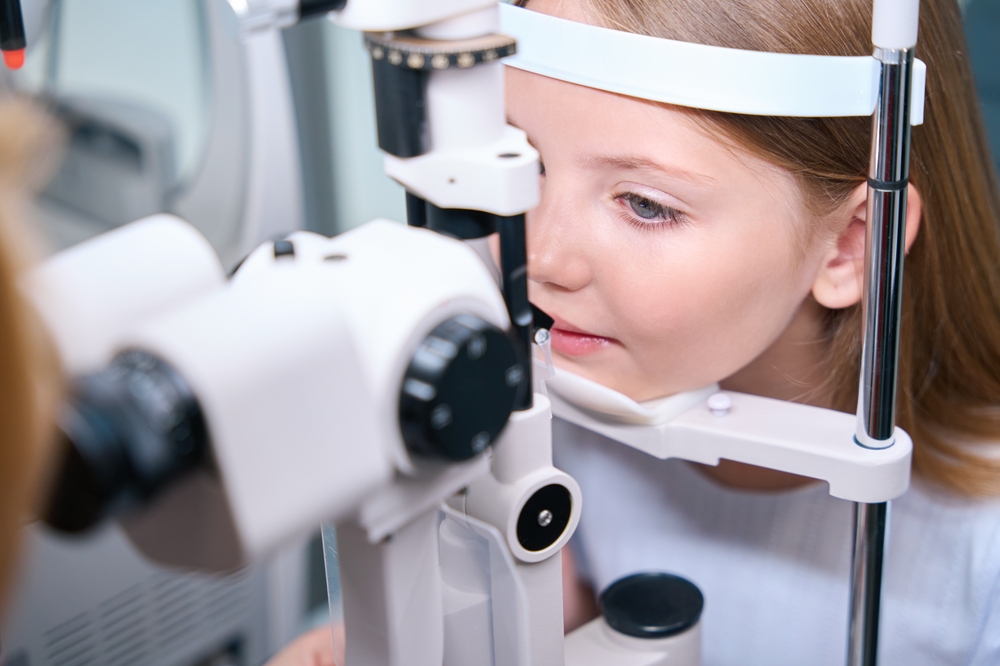
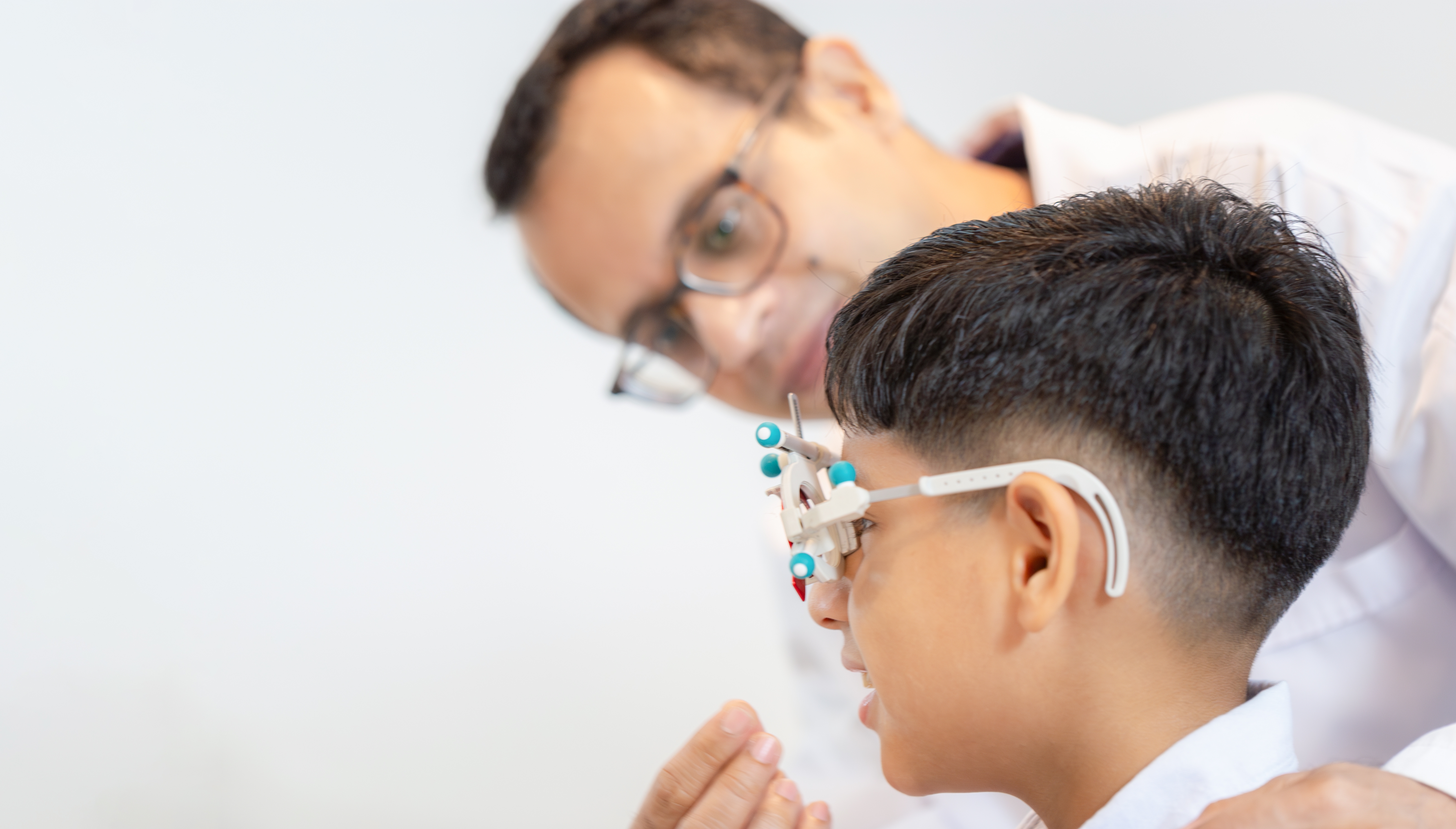
At NVISION Eyecare in Albany, Auckland, we take a thorough and individualised approach to children's eye care. It begins with a comprehensive children's eye examination that looks at far more than how many lines of a chart your child can read.
Where appropriate, we use axial length measurement to track eye growth precisely over time. This gives us—and you—a clear picture of how your child's myopia is behaving, not just today but across each visit. Ongoing monitoring then allows us to spot progression early and respond before a great deal of change has occurred.
From there, we develop a personalised treatment plan. That might involve orthokeratology, myopia control contact lenses, specialised spectacle lenses, atropine drops, or a combination, depending on what suits your child best. Throughout, our focus is on explaining things in plain language so you understand each step and feel confident in the decisions being made.
Concerned About Your Child's Changing Prescription?
If your child's eyesight seems to be getting worse year after year, it's completely understandable to want answers. The reassuring reality is that worsening myopia in children is well understood, measurable, and—in many cases—manageable with the right care.
For families in Auckland looking into myopia control, the most helpful next step is a comprehensive assessment that measures how your child's eyes are growing and explores whether intervention could help. If you'd like clarity about what's behind those changing numbers, the team at NVISION Eyecare is here to help you understand the options and choose a path that's right for your child.