
Keratoconus can cause blurred, distorted vision as the cornea becomes thinner and develops an irregular shape. Changes may begin gradually, but they can make glasses less effective and create increasing difficulty with glare, night driving, or detailed visual tasks.
NVISION Eyecare provides keratoconus assessment, corneal mapping, ongoing monitoring, and specialty contact lens fitting from our Rosedale practice near Albany. If testing indicates that the condition is progressing, we can also arrange a referral to an ophthalmologist for further evaluation.
What is Keratoconus?
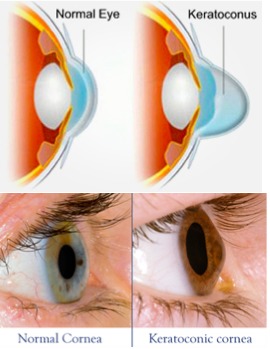
The cornea is the clear front surface of the eye that helps focus light. A healthy cornea normally has a smooth, rounded shape, while keratoconus causes it to become thinner and gradually develop a more irregular curve.
This change affects how light enters the eye and can create blurred, stretched, or distorted vision. Keratoconus often begins during the teenage years or early adulthood, although the age of onset and rate of progression can differ considerably between patients.
Keratoconus may affect one eye more than the other. Regular assessment is important because changes in corneal shape can continue even when day-to-day vision appears relatively stable.
Signs and Symptoms of Keratoconus
Early keratoconus can resemble ordinary short-sightedness or astigmatism. As the cornea becomes more irregular, patients may notice that their prescription changes frequently or that glasses no longer provide the same level of clarity.
Possible signs and symptoms include:
- Blurred or distorted vision
- Increasing or irregular astigmatism
- Frequent changes to a glasses prescription
- Glare or increased sensitivity to light
- Halos or streaks around lights
- Difficulty seeing clearly at night
- Ghosted or overlapping images
- Vision that cannot be corrected clearly with glasses
These symptoms do not always indicate keratoconus, but they should be assessed if they persist or continue to change. A comprehensive eye examination can help identify the cause and determine if more detailed corneal testing is needed.
How is Keratoconus Diagnosed?
A keratoconus assessment examines visual clarity, prescription changes, eye health, and the shape of the cornea. The optometrist may review previous prescriptions or measurements to look for changes that could indicate progression.
The assessment may include:
- Vision and prescription testing
- Examination of the cornea
- Measurement of corneal shape and curvature
- Corneal topography
- Comparison with previous measurements
- Evaluation of specialty contact lens options
The results help the optometrist determine how keratoconus is affecting the patient’s vision and what form of management may be appropriate.
Corneal Topography at NVISION
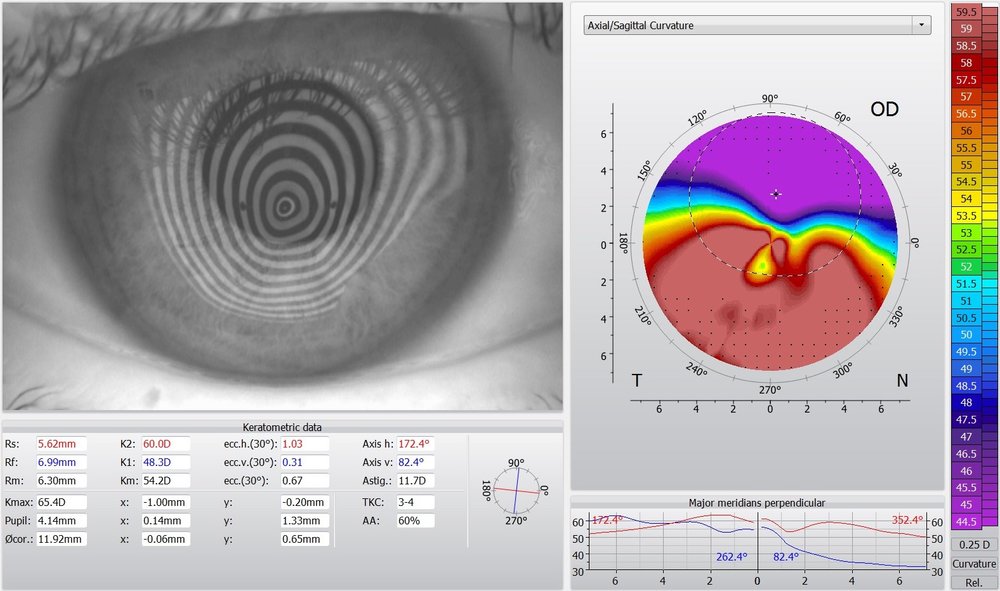
Corneal topography creates a detailed map of the front surface of the eye. The map shows variations in corneal curvature that may not be apparent during a standard vision test and provides valuable information for diagnosing keratoconus.
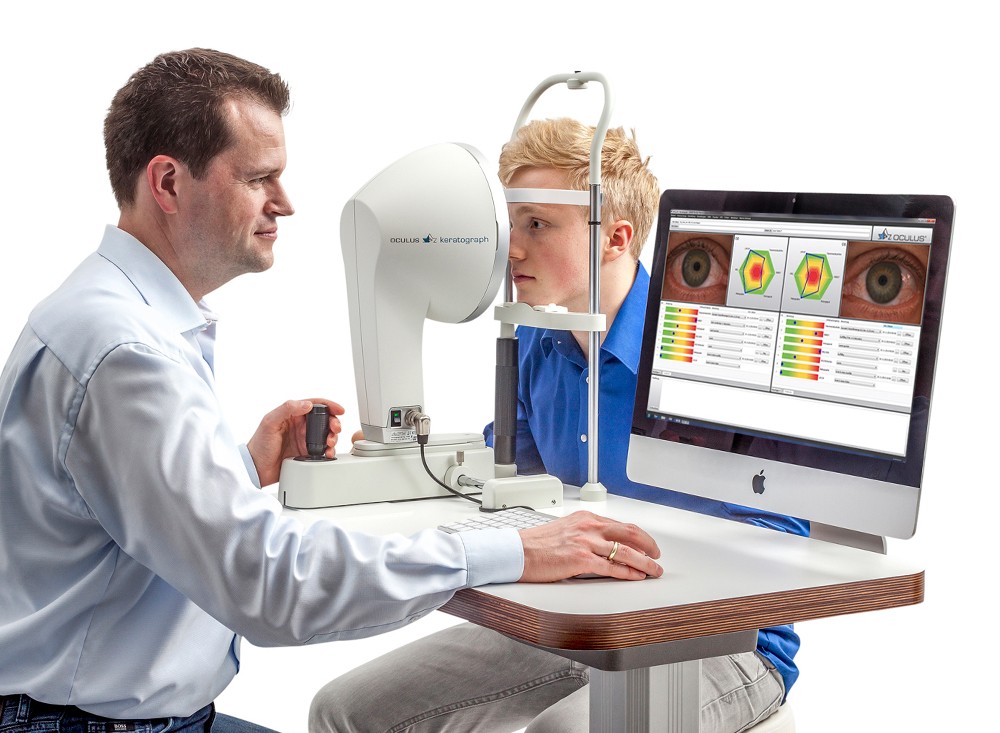
NVISION uses the Oculus Keratograph 5M to capture corneal topography maps. This diagnostic technology also provides the precise measurements needed to design and fit specialty contact lenses for an irregular cornea.
Monitoring Keratoconus Progression
A single assessment shows the current shape of the cornea, while follow-up measurements help establish if that shape is changing. Comparing topography maps, prescriptions, and visual results can provide a clearer picture of progression.
The recommended monitoring schedule depends on the patient’s age, current measurements, symptoms, and rate of change. If the results suggest that keratoconus is progressing, NVISION can discuss the findings and arrange an ophthalmology referral.
Keratoconus Treatment and Management Options
Keratoconus management has two separate aims: improving vision and controlling progression. Glasses and contact lenses can improve visual clarity, but they do not prevent the cornea from changing shape.
Corneal cross-linking is designed to strengthen the cornea and reduce further progression. It does not replace glasses or contact lenses when vision correction is still needed, so patients may require more than one form of care.
Glasses and Contact Lenses
Glasses may provide adequate vision during the early stages of keratoconus. As the cornea becomes more irregular, a glasses prescription may no longer correct the distortion clearly.
Standard soft contact lenses may also become less effective because they generally follow the irregular shape of the cornea. At this stage, a specially fitted rigid or scleral lens may create a smoother optical surface and provide clearer vision.
Rigid and Scleral Contact Lenses
Rigid gas-permeable lenses maintain their shape over the cornea rather than moulding completely to its irregular surface. This creates a more regular optical surface that can reduce distortion and improve visual clarity.
Scleral lenses are larger lenses that rest on the white part of the eye and vault over the cornea. The space between the lens and the cornea is filled with sterile fluid, creating a smooth surface through which light can pass. This design may be considered when corneal irregularity, comfort, or lens stability makes a smaller lens less suitable.
The most appropriate design depends on corneal shape, eye health, visual requirements, comfort, and the severity of the condition. Read more about how scleral lenses may be used for keratoconus.
Corneal Cross-Linking
Corneal cross-linking is a procedure used to strengthen the corneal tissue and slow or stop the progression of keratoconus. It is performed by an ophthalmologist and is generally considered when clinical measurements show that the cornea is continuing to change.
Cross-linking is intended to stabilise the cornea rather than correct all existing visual distortion. Patients may still need glasses or specialty contact lenses following the procedure.
NVISION can monitor corneal changes and discuss if an ophthalmology assessment may be appropriate. The ophthalmologist will determine eligibility and explain the procedure, expected results, and possible risks.
Surgery for Advanced Keratoconus
Surgical treatment may be considered in advanced cases when contact lenses no longer provide functional vision or cannot be worn successfully. Options depend on the condition of the cornea and must be evaluated by an ophthalmologist.
A corneal transplant may be recommended in severe cases, although it is generally reserved for patients whose vision cannot be managed adequately through less invasive options. Glasses or specialty contact lenses may still be needed after surgery.
What to Expect From a Specialty Contact Lens Fitting
A specialty contact lens fitting is more detailed than a standard contact lens appointment. The process begins with an assessment of the cornea, vision, prescription, and previous experience with glasses or contact lenses.
Corneal measurements are then used to select or design an appropriate trial lens. The optometrist evaluates the lens position, movement, clearance, comfort, and visual result before making any necessary adjustments.
Follow-up appointments allow the optometrist to check the fit, assess the health of the eye, and refine the lens if required. Patients also receive instructions for inserting, removing, cleaning, and storing their lenses safely.
Keratoconus Contact Lens Subsidies in New Zealand
A New Zealand government subsidy may contribute towards the cost of contact lens fitting and specialty contact lenses for eligible patients with keratoconus. Funding is subject to current eligibility requirements and may not cover the complete cost of assessment, fitting, or lenses.
NVISION Eyecare is a registered provider for this subsidy and can explain the documentation and application process. Visit our government subsidy page for further information, or contact the practice to discuss current eligibility requirements.
Keratoconus Care at NVISION Eyecare
NVISION provides keratoconus assessment, monitoring, and specialty contact lens fitting at the Apollo Health & Wellness Centre in Rosedale, near Albany. Our technology allows us to map the cornea in detail and use those measurements when evaluating changes or designing a specialty lens.
Ryan Mahmoud has a special interest in keratoconus and specialty contact lens fitting. He holds a Bachelor of Optometry from the University of Auckland and is a member of the Cornea and Contact Lens Society of New Zealand.
Each lens is selected according to the patient’s corneal shape, eye health, comfort, and visual needs. Follow-up appointments provide an opportunity to assess the lens, monitor the cornea, and make adjustments where needed.
Keratoconus FAQs
Can Keratoconus Be Cured?
There is currently no single cure that returns the cornea to its original shape, but keratoconus can be managed. Glasses and specialty contact lenses can improve vision, while corneal cross-linking may be recommended by an ophthalmologist to control progression.
Can Glasses Correct Keratoconus?
Glasses may provide clear vision during the early stages of keratoconus. As the cornea becomes more irregular, glasses may no longer correct the distortion adequately, and the optometrist may recommend a specially fitted contact lens.
What Contact Lenses Are Used for Keratoconus?
Rigid gas-permeable and scleral lenses are commonly considered for keratoconus because they create a smoother optical surface over the irregular cornea. Lens selection depends on the corneal shape, level of irregularity, eye health, comfort, and visual requirements.
What Is Corneal Cross-Linking?
Corneal cross-linking is an ophthalmic procedure intended to strengthen the cornea and slow or stop keratoconus progression. It does not necessarily remove existing visual distortion, so glasses or specialty contact lenses may still be needed afterward.
Does NVISION Perform Keratoconus Surgery?
NVISION provides optometric assessment, corneal monitoring, and specialty contact lens fitting rather than keratoconus surgery. If testing indicates that cross-linking or another surgical procedure should be evaluated, we can refer the patient to an ophthalmologist.
Is Funding Available for Keratoconus Contact Lenses?
A government subsidy may contribute towards contact lens fitting and specialty lenses for eligible New Zealand patients with keratoconus. NVISION is a registered provider and can explain the current eligibility and documentation requirements, but funding is not guaranteed to cover the complete cost.
Book a Keratoconus Assessment in Auckland
Changes in prescription, increasing astigmatism, or vision that remains distorted through glasses may require a closer assessment of the cornea. Corneal mapping can help identify irregular changes and guide the next stage of care.
Contact NVISION Eyecare on 09-475 5548 or book an appointment at our Rosedale practice. Our team can assess your vision, explain the findings, and discuss suitable monitoring, contact lens, or referral options.