7 Signs Your Child Needs Ortho-K (Not Just Stronger Glasses)
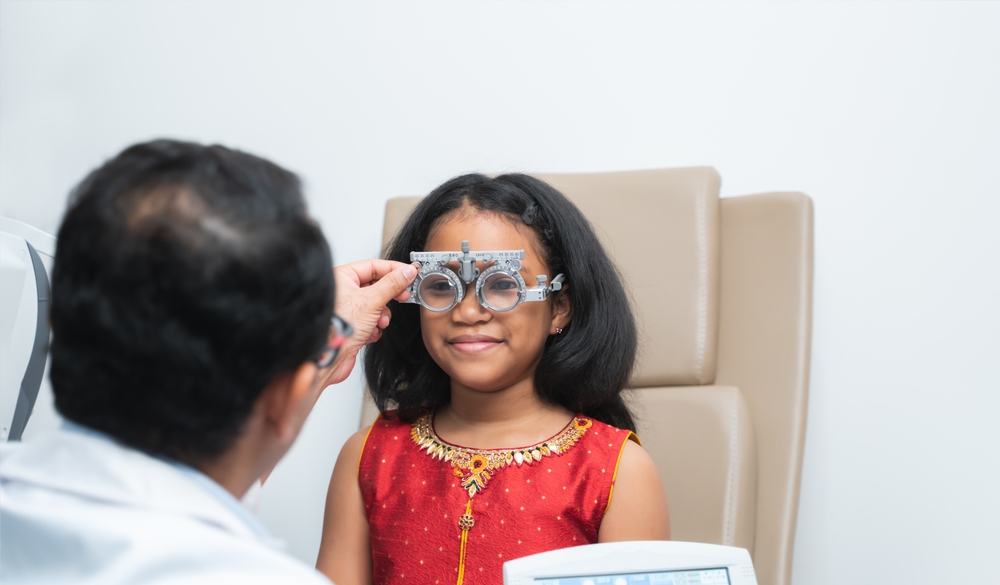
Your child just got new glasses six months ago — and the optometrist is already saying the prescription needs updating. Sound familiar?
For many Auckland parents, the cycle of ever-stronger glasses feels inevitable. But it doesn't have to be. Ortho-K (orthokeratology) can correct your child's vision AND slow down the progression of their myopia. Here are 7 signs it might be time to consider it.
1. Their Glasses Prescription Gets Stronger Every Year
This is the biggest red flag. If your child's myopia is increasing by -0.50 dioptres or more per year, their eyes are growing too fast. Standard glasses correct the blur but do absolutely nothing to slow this progression. Ortho-K has been clinically proven to slow myopia progression by 36-56% — that's a significant difference over a childhood.
2. They're Squinting at the Whiteboard at School
If your child is squinting to see the board — even with their current glasses — their prescription may be changing faster than their annual eye exam schedule can keep up with. Children often won't tell you their vision has changed; they just adapt. Squinting is their way of compensating.
3. They Hate Wearing Their Glasses
Let's be honest — many kids don't want to wear glasses. They get teased, they fog up during sport, they get knocked off during play. If your child is constantly taking their glasses off, they're not getting the vision correction they need. Ortho-K gives them clear vision all day with nothing on their face.
4. They're Active in Sports
Glasses and contact lenses during sport are a hassle at best and a safety risk at worst. Swimming, rugby, basketball, gymnastics — all of these are easier and safer without glasses. Ortho-K kids wake up with clear vision and head to training without thinking about their eyes.
5. They Spend a Lot of Time on Screens
Extended screen time is strongly associated with faster myopia progression in children. If your child spends significant time on tablets, computers, or phones — and most NZ kids do — their myopia risk is elevated. While reducing screen time is ideal, Ortho-K provides an additional layer of protection by physically slowing the rate of eye growth.
6. You or Your Partner Are Myopic
Genetics play a major role in myopia. If one parent is short-sighted, the child has about a 1 in 3 chance of developing myopia. If both parents are myopic, that jumps to roughly 1 in 2. If your family history includes high myopia (-6.00 or more), early intervention with Ortho-K is especially worth considering.
7. They're Between 6 and 12 Years Old
This is the age window when myopia typically progresses fastest. Starting myopia control during this period provides the greatest long-term benefit because you're intervening when the eye is growing most rapidly. The earlier you start, the more progression you can potentially prevent.
What Should You Do Next?
If you recognised your child in two or more of these signs, it's worth having a conversation with an optometrist who specialises in myopia control and Ortho-K. At NVISION Eyecare in Albany, Auckland, we see families in exactly this situation every week.
We'll assess your child's current prescription, measure their corneal shape, review their risk factors, and explain all the options — including Ortho-K, atropine drops, and MiSight lenses. There's no obligation, and no pressure.